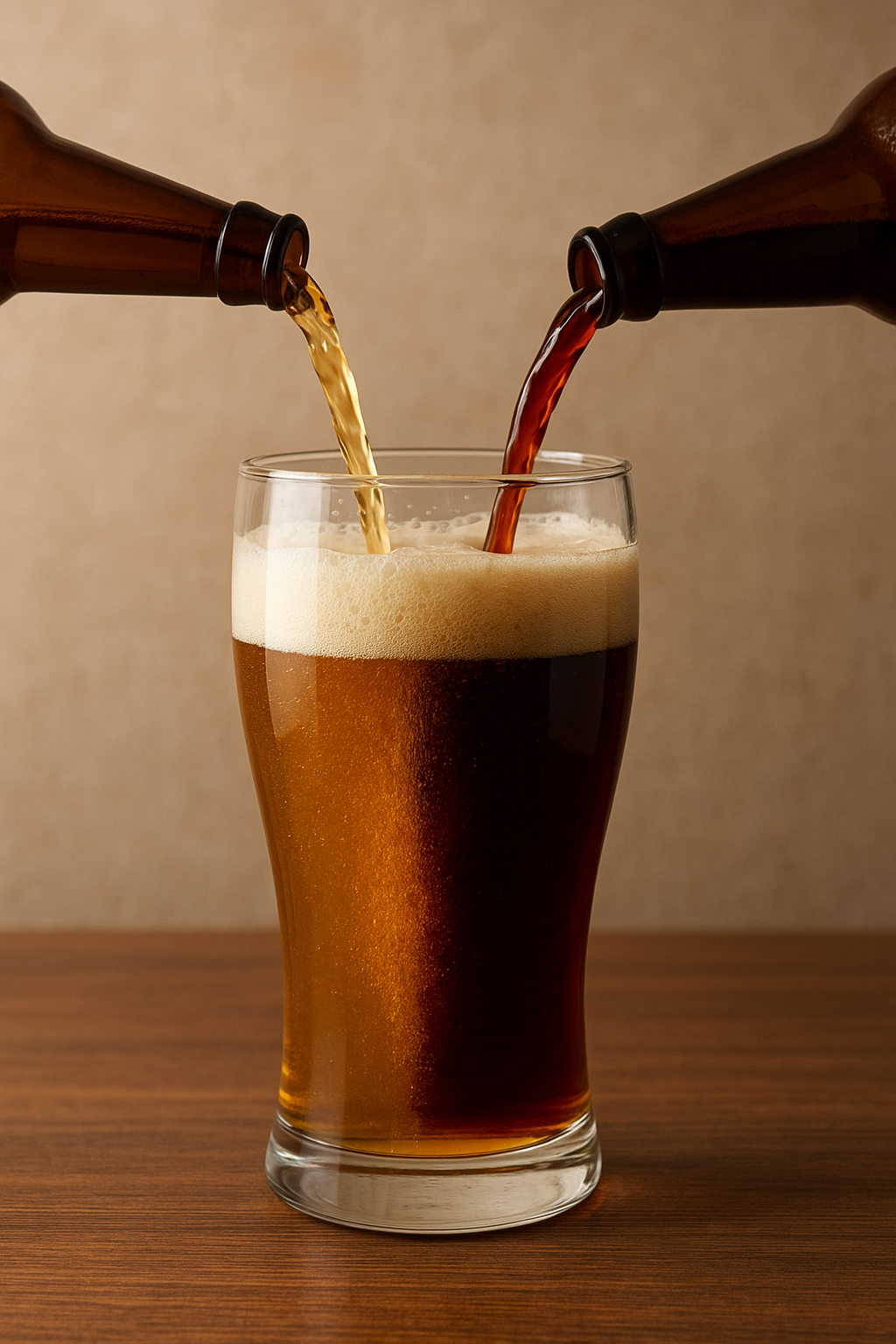
Beer blending is becoming one of those trends that some craft breweries trot out like a flashy new haircut. A splash of this stout, a glug of that saison, maybe a dollop of fruit purée tossed in like a smoothie gone rogue. While you can typically order a pint of something on the board, eventually someone will suggest “…hey, if you mix that with a little of our (fill in the blank) it’s really good!”
Can Be Good
Now, blending can be an art. Belgian lambic blenders have been doing it with their sour/wild beers for centuries. But that is not really what I’m talking about. In the production process, it is not uncommon to blend from different barrels, vintages, aged beers, wines or distilled spirits. Usually, this is done with thought toward “consistency of product”. Your customer base likes to know what your “Back forty blended whisky” tastes like and what to expect each time they buy it.
What I’m saying is, craft beers on tap, finished products that are planned and designed to hit a mark of flavour, aroma, palate etc, are just that. Designed. Throwing a couple few of these together throws that recipe’s intentionality out the window.
Hiding Something?
Let’s start with the obvious: blending can be the ultimate cover-up. Brewing a great beer is hard. Brewing a bad beer is extremely easy. And blending can give a brewer (or server) a way to nudge that bad beer into the “drinkable if you squint” category. Too much diacetyl? Blend it. Fermentation got weird? Add a little of this or that. It’s the Swiss Army knife of excuses. A good brewer shouldn’t be afraid to dump a batch if it’s not right. not pass it off as a “base” for some blending experiment.
And while we’re at it, blending, if used extensively, can also totally confuse a brewery’s identity. Drinkers fall in love with flagship beers—the ones they can trust. Kind of like that reliable friend who shows up on time and never asks to borrow money. But pouring a half pint of this and a half pint of that just muddies up the water. So to speak.
Then there’s just the sheer exhaustion of it all. Craft beer drinkers are already drowning in pastry stouts, glitter IPAs, and “experimental hop” hazies that taste like a fruit salad screaming for help. Usually, I would think, people just want a crisp, clean, intentional beer—something brewed on purpose, not “…all mixed up in a bucket” as Mr Creasote would have it. .
A few food things, existing as finished products on their own, lend well to mixing/blending. Dijon-aise comes to mind. Also, fry sauce. Is it really anything other than just ketchup and mayonnaise? Both basically just save a step. But beer…good beer, should be able to stand on its own. There are some good examples of beer blending that just “work,” but for the most part, it should be left in the lab, and not at the bar.